

Maggie Gyllenhaal's $25M Net Worth: How 'The Lost Daughter' Director Rewrote Her Career
Academy Award nominee, Golden Globe winner, and Hollywood's most daring filmmaker — the complete biography.
Who Is Maggie Gyllenhaal?
Margalit Ruth Gyllenhaal (born November 16, 1977, in New York City) is an American actress, screenwriter, and film director who has built one of the most intellectually rigorous careers in Hollywood over three decades. Known for her refusal to take the predictable path — choosing complex, challenging roles over conventional star vehicles — she earned an Academy Award nomination for Best Supporting Actress for Crazy Heart (2009), a Golden Globe for The Honourable Woman (2014), and an Oscar nomination for Best Adapted Screenplay for her directorial debut, The Lost Daughter (2021). In , her gothic ensemble film The Bride! confirmed her status as one of American cinema's most ambitious auteurs.
At years old, she stands at a remarkable inflection point: an actress who never stopped working at the highest level, and a filmmaker who arrived at directing later than most and immediately demonstrated she was one of the best at it. This is the complete story of how that happened.
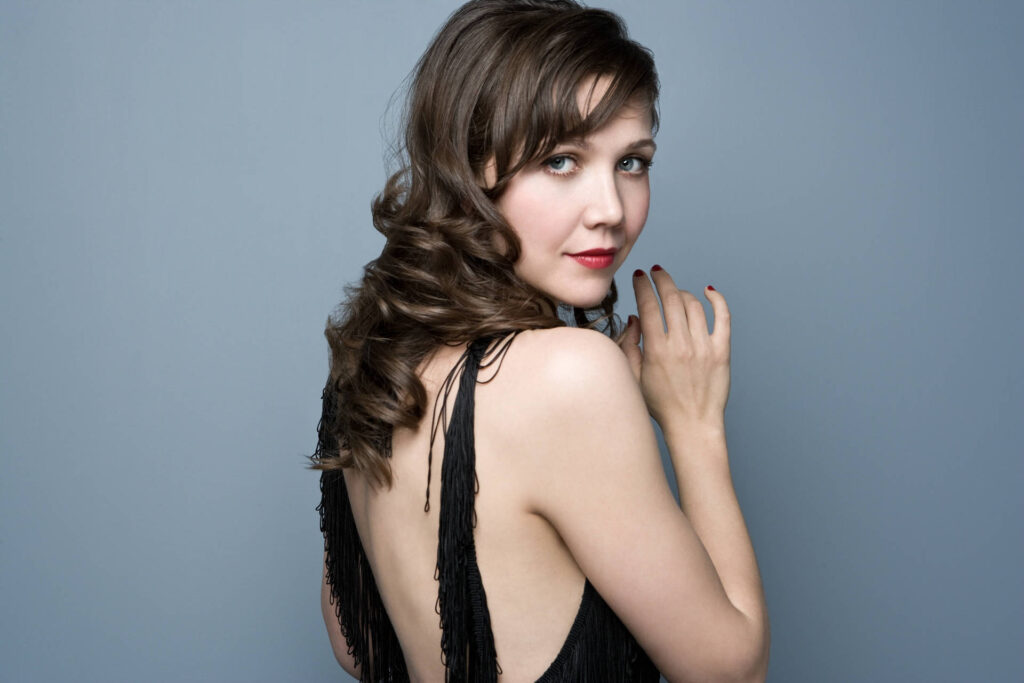
Image Credit – Wallpapers.com
| Personal Information | |
| Full Name | Margalit Ruth Gyllenhaal |
| Date of Birth | November 16, 1977 |
| Age | years old |
| Birthplace | New York City, New York, USA |
| Zodiac Sign | Scorpio |
| Nationality | American |
| Physical Attributes | |
| Height | 5 ft 5 in (1.65 m) |
| Eye Color | Blue |
| Hair Color | Dark Brown / Blonde |
| Career & Financial | |
| Net Worth (2026) | $25 million (est.) |
| Profession | Actress, Screenwriter, Film Director |
| Breakthrough Role | Secretary (2002) |
| Notable TV | The Honourable Woman (2014) · The Deuce (2017–2019) |
| Directorial Debut | The Lost Daughter (2021) — Venice Golden Lion winner |
| Latest Film | The Bride! (2026) — written and directed |
| Academy Award Noms. | 2 — Best Supporting Actress (2010) · Best Adapted Screenplay (2022) |
| Golden Globe Wins | 1 — Best Actress in a Miniseries (The Honourable Woman, 2015) |
| Family | |
| Spouse | Peter Sarsgaard (married May 2, 2009) |
| Children | Ramona (b. 2006) · Gloria Ray (b. 2012) |
| Parents | Stephen Gyllenhaal (director) · Naomi Foner (screenwriter) |
| Sibling | Jake Gyllenhaal (younger brother) |
| Social Profiles | |
| Wikipedia | View Wikipedia Profile |
| IMDB | View IMDB Profile |
Note: Maggie Gyllenhaal does not maintain a public verified Instagram account.
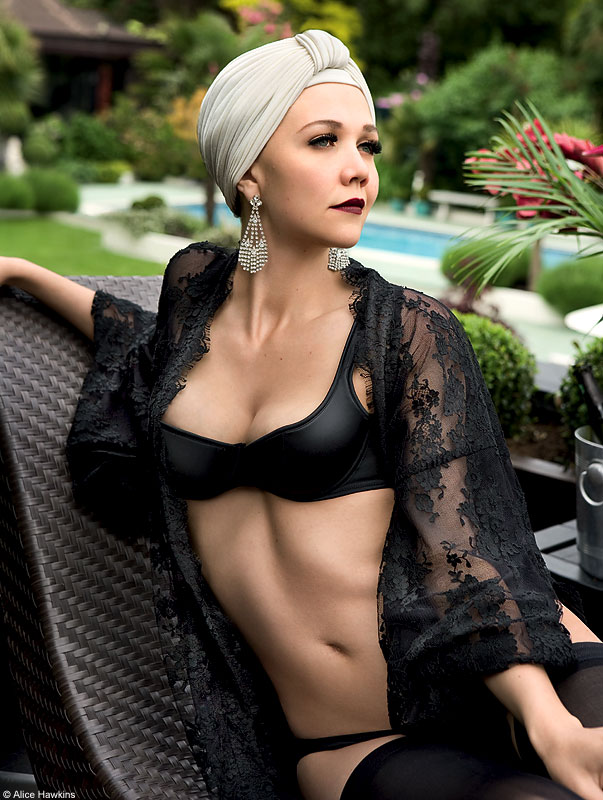
Image Credit – Wallpapers.com
Early Life: Cinema in the Blood
A Filmmaking Family
Maggie Gyllenhaal did not choose cinema so much as grow up inside it. Born in New York City on November 16, 1977, to director Stephen Gyllenhaal and screenwriter and producer Naomi Foner, she was raised in a household where the grammar of filmmaking — story structure, character motivation, the mechanics of adaptation — was everyday conversation rather than specialist knowledge. Her younger brother Jake Gyllenhaal would eventually become one of Hollywood's leading actors, but in the Gyllenhaal household that was less a coincidence than a predictable outcome: these were children surrounded from birth by people who made films seriously and thought about them constantly.
She grew up primarily in Los Angeles after the family relocated from New York, attending Harvard-Westlake School in the San Fernando Valley. She appeared in early roles directed by her father — her screen debut came in his 1992 film Waterland — but these were not the calculated early-career moves of a stage parent operation; they were the natural consequence of a daughter being on set while her father worked.
Columbia University and the Intellectual Foundation
Rather than pursuing acting full-time after her early screen appearances, she enrolled at Columbia University to study literature — a decision that proved formative in ways that would only become fully visible decades later when she turned to adapting Elena Ferrante's novel for The Lost Daughter. The literary education gave her a framework for understanding narrative, character psychology, and the relationship between text and image that most filmmakers acquire only through years of professional trial and error.
She graduated in 1999, by which point she had accumulated enough student film and small-scale professional experience to begin approaching Hollywood seriously. Her background was unusual for a young actress entering the industry: intellectually rigorous, literarily trained, culturally engaged in ways that extended well beyond the entertainment industry. That background would eventually become the foundation of everything she chose to do with her career.
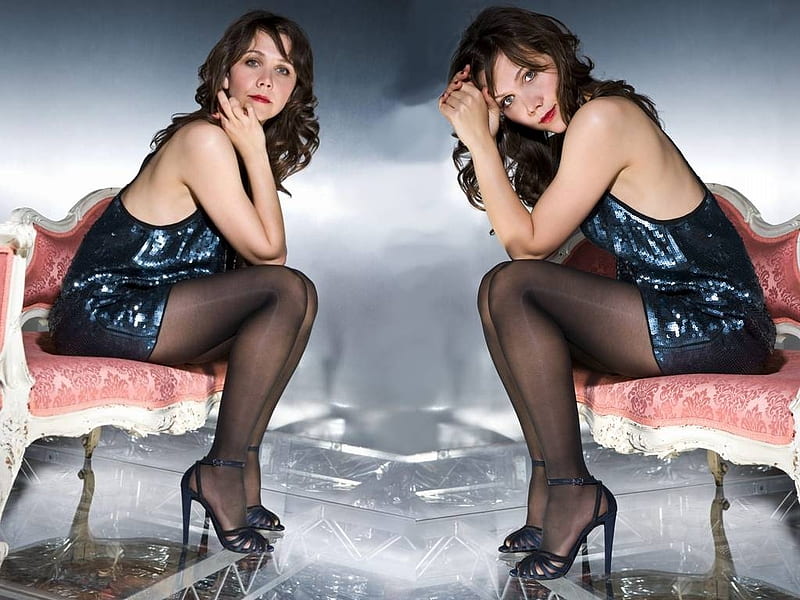
Image Credit – Peakpx
The Breakthrough: Secretary and the Refusal to Play It Safe
Secretary (2002): Announcing an Unconventional Career
The film that made Maggie Gyllenhaal's name was not the kind of film that makes most names. Secretary (2002), directed by Steven Shainberg, is a darkly comic love story in which her character, Lee Holloway, enters into a BDSM relationship with her employer. It is a film about power, desire, and self-determination — and it requires its lead actress to be simultaneously vulnerable, funny, determined, and completely without self-consciousness for the entire running time. She delivered all of this while navigating subject matter that most actresses at the beginning of their careers would have refused entirely on image-management grounds.
The film was a critical sensation at Sundance and earned her a Golden Globe nomination for Best Actress in a Musical or Comedy. More importantly, it established the terms of her career with unusual clarity: she would prioritise complexity over safety, difficulty over commercial convenience, and artistic challenge over the incremental brand-building that sustains most Hollywood careers. That position held for the next twenty years.
Building the Portfolio: 2002–2008
In the years following Secretary, she accumulated a body of work that reinforced her reputation as an actress who chose roles rather than being assigned them. Donnie Darko (2001), released just before Secretary, had already given her significant indie credibility. Sherrybaby (2006) — for which she played a recovering heroin addict navigating early parole — earned her an Independent Spirit Award and widespread critical recognition. World Trade Center (2006) and Stranger Than Fiction (2006) demonstrated her range in mainstream studio productions without compromising the seriousness with which she approached every assignment.
In 2008, she played Rachel Dawes in Christopher Nolan's The Dark Knight — a blockbuster franchise film that she approached with the same rigour she brought to her smaller, more personal projects. The film grossed over $1 billion globally and introduced her to the largest audience of her career, though her most significant work of that period remained on much smaller screens, in independent films that paid attention to her in ways that franchise productions structurally cannot.
- 2001: Donnie Darko — cult indie breakthrough
- 2002: Secretary — Golden Globe nomination, career-defining role
- 2006: Sherrybaby — Independent Spirit Award nomination
- 2008: The Dark Knight — global blockbuster exposure
- 2009: Crazy Heart — Academy Award nomination, Best Supporting Actress

Image Credit – Peakpx
Crazy Heart, Television and the Golden Globe
The Oscar Nomination: Crazy Heart (2009)
Crazy Heart (2009) gave her what may be her finest film performance to date. Playing Jean Craddock, a journalist and single mother who falls into an unsustainable relationship with a declining country music singer played by Jeff Bridges, she created a character of extraordinary emotional intelligence — someone who loves with complete generosity while simultaneously understanding, with painful clarity, that the relationship cannot survive the man's self-destruction. The performance is calibrated with precision: she is never passive, never simply "the woman who loves a difficult man," but someone with her own wants and limits that the film takes entirely seriously.
The Academy nominated her for Best Supporting Actress, and while she did not win — the award went to Mo'Nique for Precious that year — the nomination confirmed her standing among the most capable dramatic actresses working in American film. Bridges won Best Actor for the same film, and the recognition the two received together drew sustained critical attention to the quality of their work as a screen pairing.
The Honourable Woman and The Deuce: Television as Serious Work
Like most serious film actresses of her generation, she eventually discovered that the best dramatic material available was increasingly appearing on television rather than in studios. The Honourable Woman (2014), a BBC miniseries in which she played a British-Israeli businesswoman navigating the politics of the Israeli-Palestinian conflict, was the role that demonstrated definitively what she was capable of across an extended format. The performance earned her the Golden Globe for Best Actress in a Miniseries, an Emmy nomination, and sustained critical admiration for the control and intelligence with which she held together an extremely complex narrative over eight hours.
The HBO series The Deuce (2017–2019), David Simon's portrait of the New York sex industry in the 1970s and 1980s, gave her another extended canvas — and another opportunity to bring the same intellectual rigour to a character whose world was entirely unlike anything in her own experience. Her work in both series confirmed that her abilities translated without diminishment to episodic television, and that she was among the small group of performers for whom the expanding prestige television landscape represented genuine artistic opportunity rather than a commercial fallback.
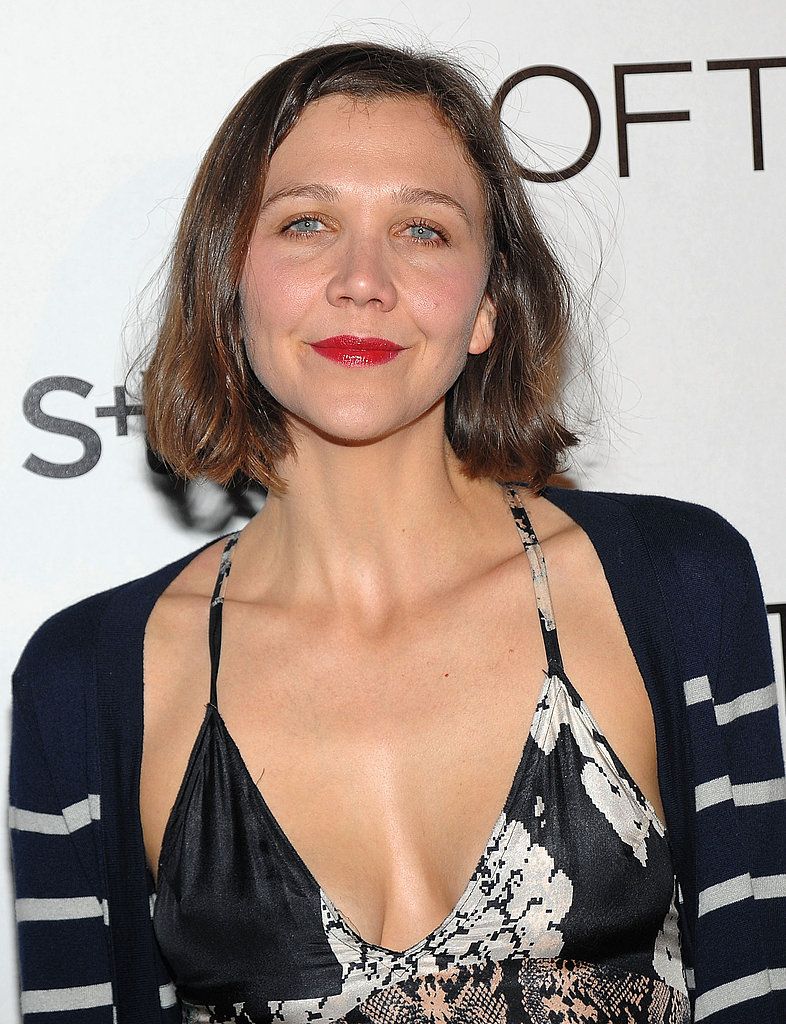
Image Credit – Wallpapers Cave
The Lost Daughter: Becoming a Director
Adapting Elena Ferrante
The transition from actress to writer-director is one that many performers announce as a career aspiration and very few successfully execute. She managed it with her debut, The Lost Daughter (2021), an adaptation of Elena Ferrante's novella of the same name. The source material — a story about a middle-aged academic whose holiday on a Greek island triggers a destabilising encounter with her own complicated feelings about motherhood — is the kind of interior, psychologically dense narrative that is notoriously difficult to translate from page to screen.
Her approach to the adaptation was to honour Ferrante's most uncomfortable insights rather than softening them for broader palatability. The film stars Olivia Colman as the present-day Leda and Jessie Buckley as the younger version, with Dakota Johnson, Ed Harris, and Peter Sarsgaard in supporting roles. It won the Best Screenplay award at the Venice Film Festival — where it had its world premiere — and went on to earn her an Academy Award nomination for Best Adapted Screenplay, alongside nominations for Colman (Best Actress) and Buckley (Best Supporting Actress).
What The Lost Daughter Proved
What The Lost Daughter demonstrated was not merely that she could direct competently, but that her literary background, her decades of experience reading scripts and characters as an actress, and her specific sensibility — interested in the moral complexity of ordinary experience, particularly as it relates to women and their inner lives — translated into a directorial voice that was fully formed on the first attempt. That is rare. Most first films, even from talented directors, feel like apprentice work. The Lost Daughter felt like the statement of a filmmaker who had been preparing for the role for thirty years.
- Venice Film Festival: Best Screenplay — Maggie Gyllenhaal
- Academy Awards 2022: Nominated — Best Adapted Screenplay
- Academy Awards 2022: Nominated — Best Actress (Olivia Colman)
- Academy Awards 2022: Nominated — Best Supporting Actress (Jessie Buckley)
- BAFTA 2022: Nominated — Best Adapted Screenplay
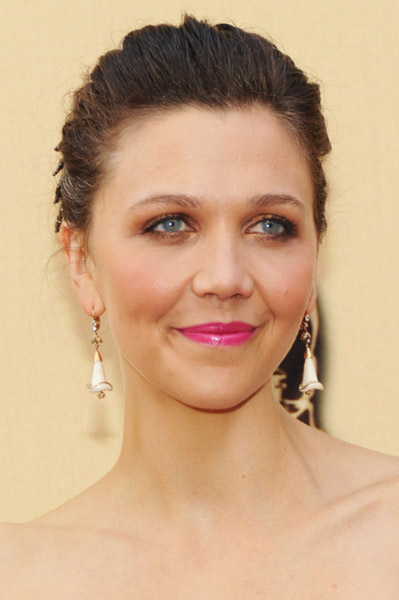
Image Credit – IMDB
The Bride! (2026): The Second Film
A Gothic Ensemble in
Her second film as writer-director — The Bride!, released in the United States on March 6, 2026 — confirmed that her directorial ambition extends far beyond the measured, intimate psychological drama of her debut. A gothic romantic film inspired loosely by the Bride of Frankenstein mythology, the project assembled one of the most extraordinary casts in recent memory: Jessie Buckley, Christian Bale, Penélope Cruz, Annette Bening, Jake Gyllenhaal (her brother), and Peter Sarsgaard (her husband). The scope, the visual register, and the thematic territory were all dramatically different from The Lost Daughter, which is precisely the point — she is not interested in repeating herself.
The production marked a significant expansion of her filmmaking vocabulary: where The Lost Daughter was intimate, interiorised, and disciplined in its refusal to reach for any effect not supported by the emotional reality of its characters, The Bride! operates in a bolder, more expressionistic register. The ensemble cast — requiring her to manage performances of very different types simultaneously — represented a logistical and creative challenge of an entirely different magnitude.
The Significance of the Second Film
In the history of cinema, the second film is often where a director's true identity becomes visible. The first film can be dismissed as a lucky accident or a one-off personal statement; the second reveals whether there is a sustained point of view and a developing craft. With The Bride!, she demonstrated both: a genuine visual sensibility, a preoccupation with women's agency and desire that runs through both films despite their very different surface registers, and a willingness to take risks that most filmmakers — at any stage of their careers — would avoid. The critical conversation surrounding both films in positions her as one of the most significant directing voices to have emerged from the Hollywood acting world in decades.
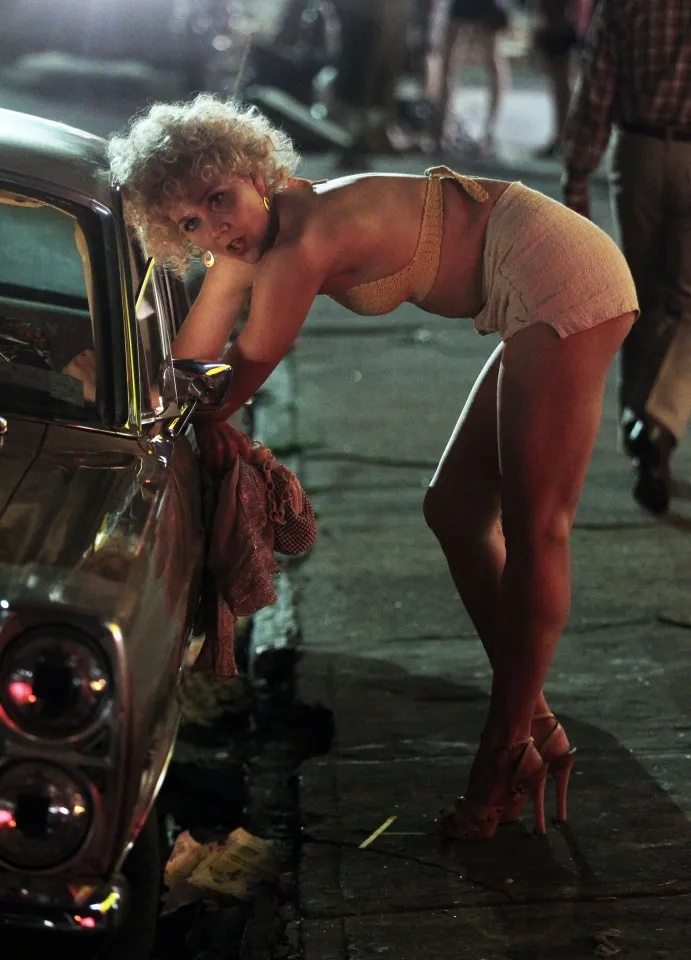
Image Credit – The Sun
Personal Life: Peter Sarsgaard, Family, and the Marriage at the Centre of the Work
Peter Sarsgaard
She has been married to actor Peter Sarsgaard since May 2, 2009. The two began their relationship in 2002 — the same year Secretary launched her career — and have maintained one of Hollywood's more genuinely private partnerships over the decades since. Sarsgaard's own career — serious, character-driven, deliberately uncommercial in many of its choices — mirrors hers in its prioritisation of artistic quality over mainstream visibility.
The creative collaboration between them is not merely biographical. He appeared in The Lost Daughter (2021) and The Bride! (2026), both films she wrote and directed. The willingness to cast her husband in both her directorial features reflects either unusual professional confidence or an equally unusual marital partnership — most likely both. The working relationship appears to be genuinely collaborative rather than a matter of convenience: he is cast in roles that require the specific qualities he possesses, not simply because he is available.
Their Children and Family Life
The couple have two daughters: Ramona, born in 2006, and Gloria Ray, born in 2012. Their family life has been kept largely private — consistent with the general approach both parents take to their public personas, which is to be present and forthcoming about their work while maintaining a firm boundary around their home life. Both children were born before the couple married, which Gyllenhaal has spoken about as simply the way their relationship unfolded rather than as a statement of any kind.
Her brother Jake Gyllenhaal — who appeared in The Bride! — represents a continued family dimension to her professional life that has been a feature of her career since her father directed her first screen appearance. The Gyllenhaal family's relationship with cinema spans three generations and several decades of serious professional work.
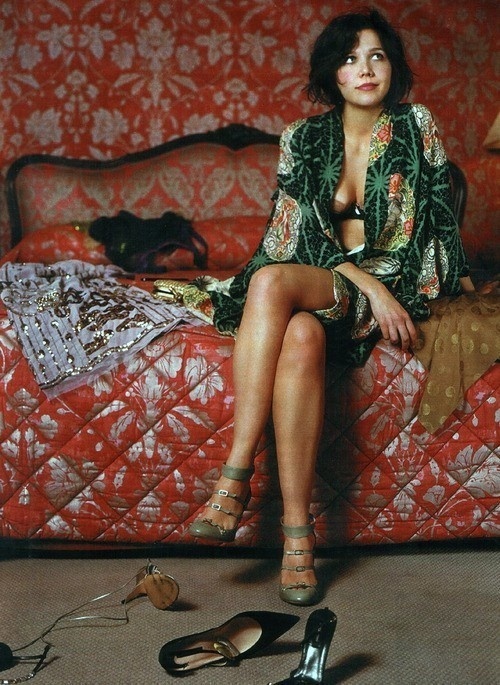
Image Credit – Design Inspiration
Maggie Gyllenhaal Net Worth 2026
Her estimated $25 million net worth in 2026 reflects three decades of sustained work at the highest level of the film and television industries. The income streams are diversified across acting fees from prestige productions including The Dark Knight, Crazy Heart, The Honourable Woman, and The Deuce; directing and screenwriting fees for her two features; and the kind of ongoing professional demand that comes from being regarded by serious directors and producers as one of the most reliable and intelligent performers in the industry. Unlike many actresses of comparable profile, her net worth reflects almost exclusively the value of her work rather than endorsement deals or brand partnerships — which is consistent with her career's overall aesthetic.
Final Thoughts on Maggie Gyllenhaal
What distinguishes a career like this one is the consistency of the underlying position: the conviction that the most interesting work is rarely the most commercially comfortable, and that the accumulation of challenging choices over time produces something more durable than any single hit. Secretary was a film most advisers would have counselled against. The Lost Daughter was a directorial debut that could easily have been dismissed as a vanity project. The Bride! could have been seen as an overreach. All three turned out to be exactly right — not because they were safe, but because they were made with complete commitment to the specific artistic problem each one posed.
In , at years old, the arc of the career now reads like a long, slow argument against the entertainment industry's standard operating assumptions — and the argument is winning. Two Oscar nominations in two different creative capacities. A Golden Globe. A Venice screenplay prize. A filmography that has aged consistently better than almost anything produced by the conventional studio system during the same period.
She chose Secretary at 24 and The Lost Daughter at 43 — and the choices tell exactly the same story about exactly the same person, which is the most reliable evidence that the career has always had a direction, even when it looked like it was just looking for interesting things to do.
Last Updated: May 26, 2026
Frequently Asked Questions About Maggie Gyllenhaal
How old is Maggie Gyllenhaal in 2026?
Maggie Gyllenhaal was born on November 16, 1977. In 2026, she is years old.
What is Maggie Gyllenhaal's net worth in 2026?
Maggie Gyllenhaal's net worth is estimated at approximately $25 million in 2026, accumulated through her acting career in film and prestige television and her income as a screenwriter and director.
Who is Maggie Gyllenhaal married to?
Maggie Gyllenhaal is married to actor Peter Sarsgaard. The couple married on May 2, 2009, and have two daughters, Ramona (born 2006) and Gloria Ray (born 2012).
What movie did Maggie Gyllenhaal direct?
Maggie Gyllenhaal wrote and directed two films: The Lost Daughter (2021), an adaptation of Elena Ferrante's novella that won Best Screenplay at Venice and earned three Academy Award nominations; and The Bride! (2026), a gothic romantic film starring Jessie Buckley, Christian Bale, Penélope Cruz, and Annette Bening.
Has Maggie Gyllenhaal won an Academy Award?
Maggie Gyllenhaal has not won an Academy Award but has received two nominations: Best Supporting Actress for Crazy Heart (2010) and Best Adapted Screenplay for The Lost Daughter (2022). She also won the Golden Globe for Best Actress in a Miniseries for The Honourable Woman (2015).
Is Jake Gyllenhaal Maggie Gyllenhaal's brother?
Yes. Jake Gyllenhaal is Maggie Gyllenhaal's younger brother. Both are children of director Stephen Gyllenhaal and screenwriter Naomi Foner. Jake appeared in The Bride! (2026), directed by Maggie.
What was Maggie Gyllenhaal's breakout role?
Maggie Gyllenhaal's career-defining breakthrough came with Secretary (2002), directed by Steven Shainberg, which earned her a Golden Globe nomination for Best Actress and established her reputation for taking complex, unconventional roles.